

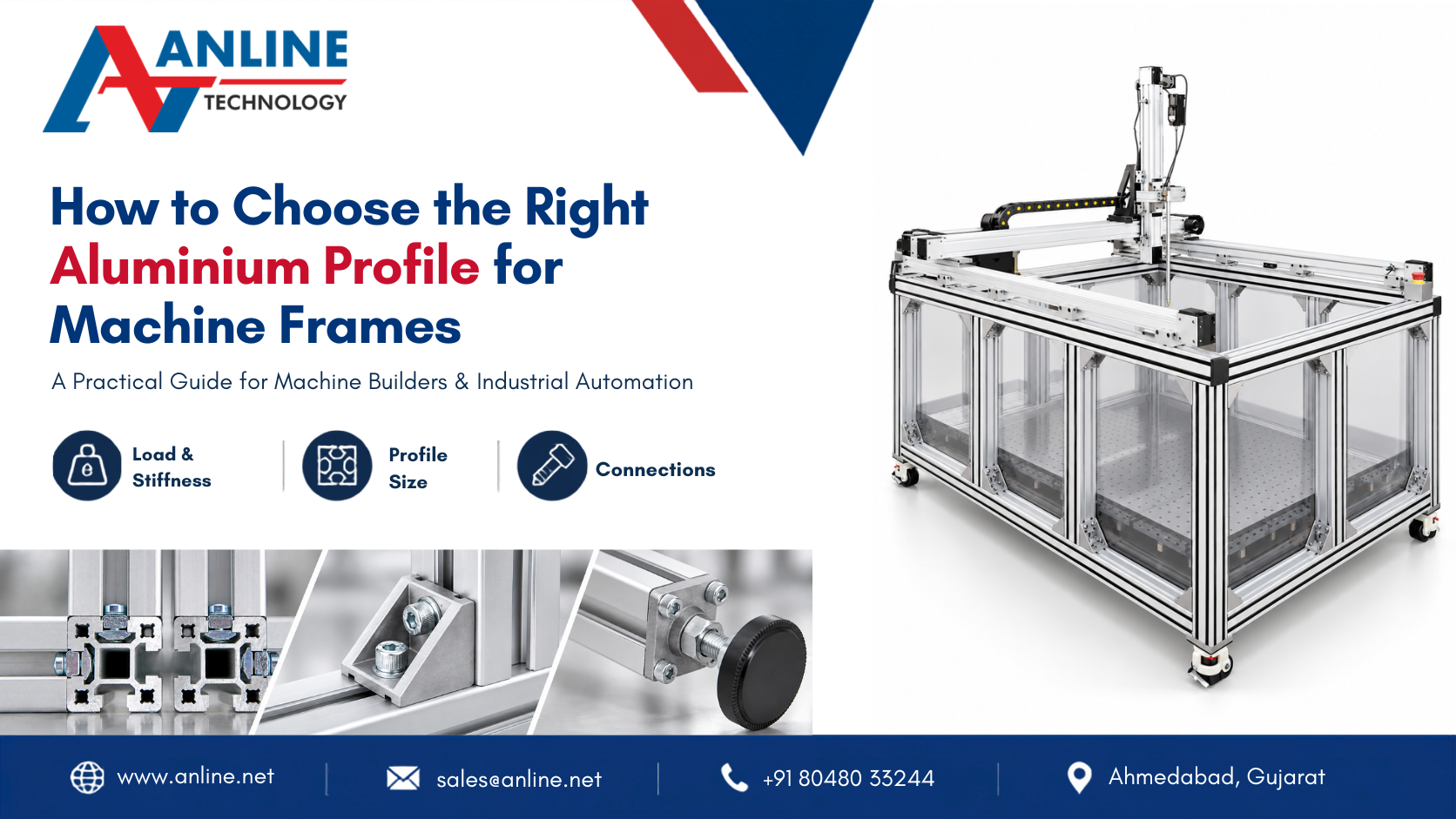
The right aluminium profile plays an important role in the stability, performance, and flexibility of a machine frame. Whether you are building a workstation, conveyor, machine guard, or automation system, selecting the appropriate profile helps create a reliable and efficient structure.
Key Factors to Consider :
1. Load & Application :
- Consider the equipment weight, load distribution, unsupported span, and operating conditions. For precision machinery, frame stiffness and deflection are just as important as load capacity.
2. Profile Size & Strength :
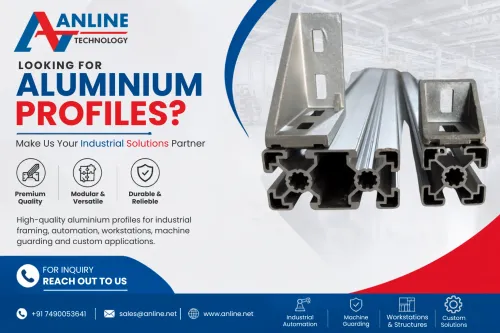
- Choose a suitable cross-section based on your application. Common sizes include 20×20, 40×40, 40×80, 45×45, 45×90, 60×60, 80×80, and 120×120 mm. Larger profiles may offer greater rigidity, but the final selection should be verified using technical data.
3. Accessories & Connections :
- Compatible T-nuts, brackets, joint plates, and fasteners are essential for a stable assembly. Proper connections and bracing help maintain rigidity while allowing future modifications.
4. Installation & Maintenance :
- Plan for access, cable routing, panels, and future expansion. Modular aluminium framing makes it easier to assemble, modify, and reconfigure industrial structures.
Build with Anline Technology
Looking for a reliable partner for machine guard assembly?
Anline Technology supports machine manufacturers with custom-cut aluminium profiles, accessories, and modular structures assembled as per customer drawings.
📧 sales@anline.net
🌐 www.anline.net
📍 Ahmedabad, Gujarat, India
#MachineGuarding #MachineGuardAssembly #AluminiumProfiles #MachineBuilders #OEMSolutions #IndustrialAutomation #MachineSafetyEnclosures #AnlineTechnology #IndustrialAutomation #FactoryAutomation #MachineFrames #ModularFraming #AluminiumProfiles #AluminiumProfileStructures